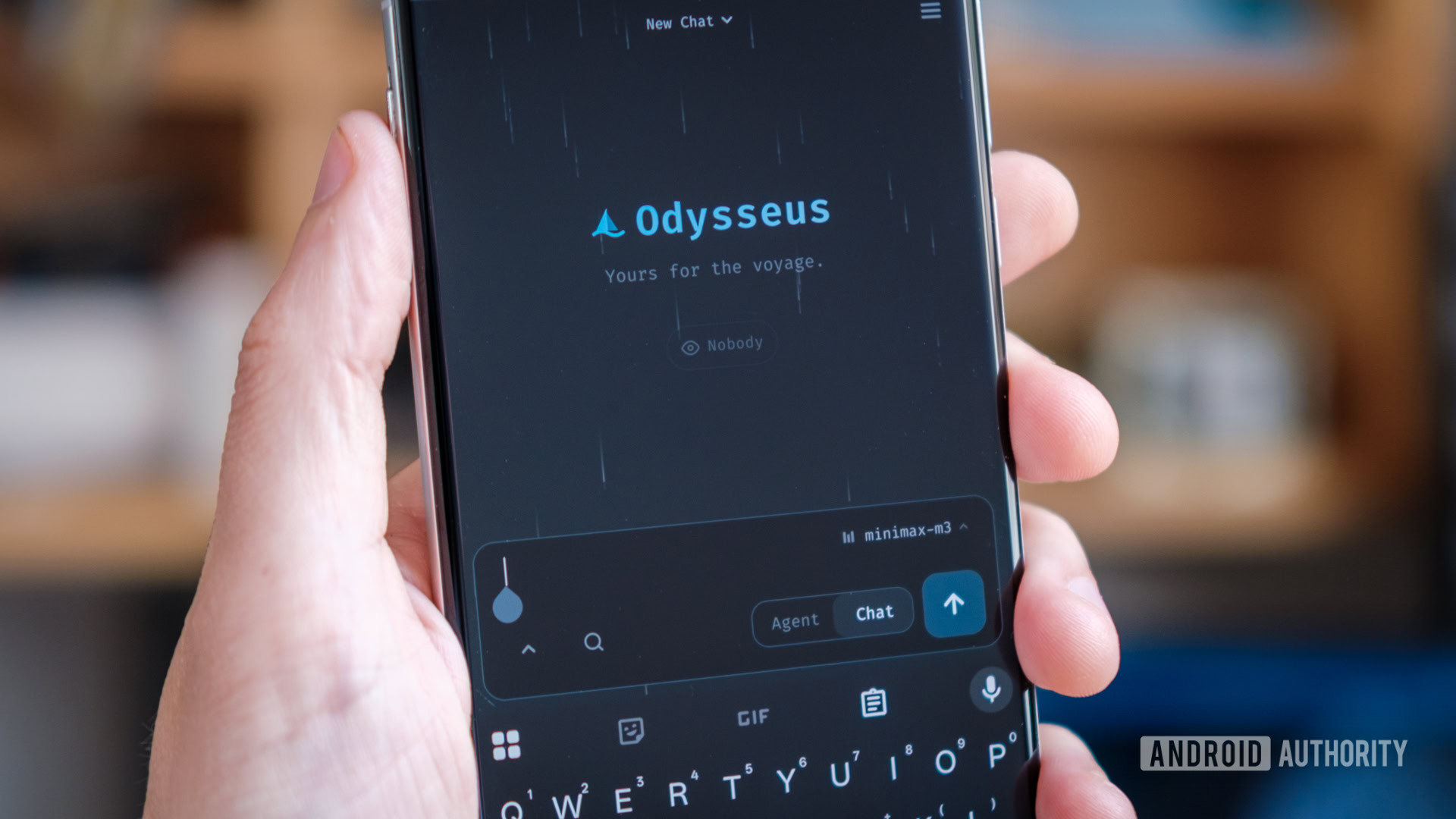
I self-hosted PewDiePie’s Odysseus AI workspace, and it’s surprisingly brilliant
PewDiePie has unveiled Odysseus, a self-hosted AI workspace designed for privacy-first interaction with various tools and data. This platform allows users to run AI models locally or connect to cloud APIs, providing a comprehensive environment for tasks like coding, document processing, and email management. Its core appeal lies in keeping all personal data and interactions on the user's premises, mitigating concerns about third-party data exploitation and subscription fees associated with commercial AI services.
Odysseus is built for easy self-hosting, primarily through Docker images, and features a "Cookbook" for managing local LLMs from Hugging Face, similar to LM Studio or Ollama. For those without powerful local hardware, it supports bringing your own cloud-hosted models via OpenRouter API keys, maintaining data privacy by keeping interactions local. Key functionalities include deep research tools that distill web results into formatted documents, customizable "Persona" system prompts, multi-persona group chats, scheduled tasks, and document co-editing across various file types, all within carefully scoped workspaces to prevent unauthorized file system access.
For the OpenClaw ecosystem, Odysseus presents a compelling alternative to fully autonomous agents by offering a controlled, privacy-centric environment for agentic workflows. Its multi-persona group chat feature directly supports experimentation with multi-agent systems, allowing different AI models to interact and cross-check information, which is crucial for complex problem-solving. The platform's emphasis on self-hosting and local data processing empowers developers to build and deploy custom AI agents with greater control and security, fostering innovation in agentic AI without reliance on proprietary cloud infrastructure.
This signal is particularly strong for developers and researchers interested in agentic AI, as it provides a flexible, open-source-friendly platform for building and testing multi-agent systems with a focus on data privacy. Operators will find value in its self-hostable nature and cost-effective model integration, offering a robust solution for deploying AI assistants in sensitive environments. The scoped workspaces also offer a safer, more controlled sandbox for agent experimentation compared to more unconstrained agent frameworks.